
COURSES
Professor Domenico Sgambati/Vincenzo Donnarumma
MSC 101 – 45 hrs classroom + 45 hrs lab, 4 credits (Spring and Fall)
MSC 113 – 45 hrs classroom, 3 credits (Summer Terms)
This course focuses on the biology of organisms residing in the sea, from the diversity of planktonic communities to marine megafauna, taking into consideration the ecological principles that govern marine life.The course aims to provide a solid educational background in basic and applied marine biology. Emphasis will be placed on marine environment issues and the adaptive and evolutionary mechanisms of organisms that allow them to occupy marine habitats. In particular, the Mediterranean Sea will play a central role in the course subjects, profiting from the availability of unique ecosystems and a nearby renowned marine research institute to conduct thematic field trips and practical tutorials.
REQUIREMENTS: bring a mask and a snorkle for Marine Bio field trips
45 hrs, 3 credits
Course Description
The course aims to give an introduction to the science of geology. In particular, the main types of rocks are analyzed with an emphasis on genetic processes and in relationship to plate tectonics theory.
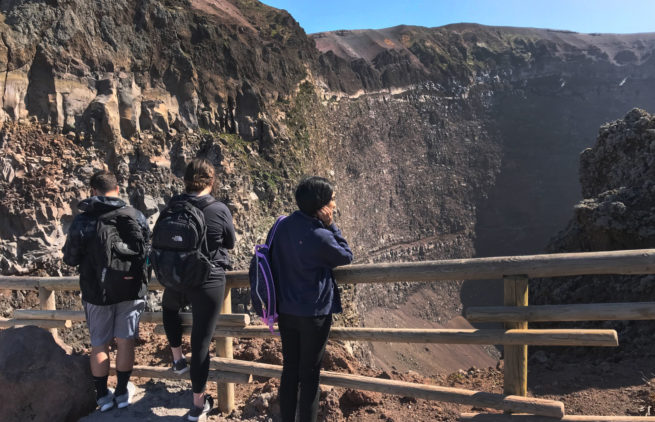
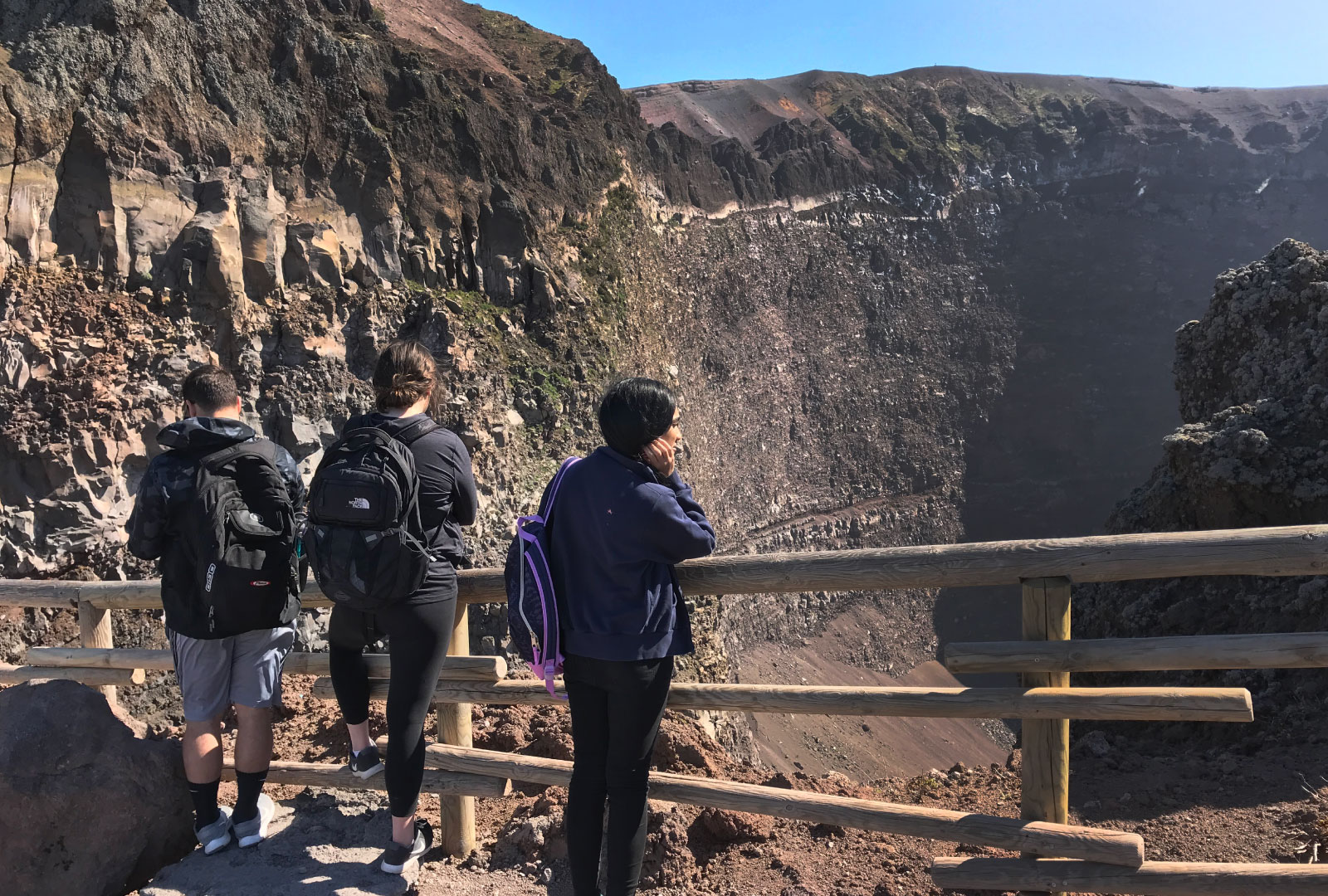
This basic knowledge will provide a background to understand and study the main geological risks, such as volcanoes, earthquakes, floods, and landslides. Specific examples from the Apennines mountain chain and Campanian plain will be examined to contextualize these topics in the Italian environment. In addition, a significant aim of this course is for students to gain a conscious relationship with the environment. The Campania region is an ideal place for experiential learning via site visits, with the opportunity for students to witness a wide range ofgeological features.
The evaluation for the course will include mid-term and final written exams, a presentation and graphical exercises.
4 credits
Course Description
45 hrs, 3 credits
This course is an introduction to programming for the World Wide Web. Students will learn about the relationship between clients and servers, how the internet works, and how web pages are constructed using several technologies. More specifically, in the development of Web applications, the student will learn the scripting languages that can be execute on the browser or on the server and the languages adopted for the exchange of information and its management in database systems.
45 hrs, 3 credits
The course is an introduction to the main elements of geological sciences including stratigraphy laws, the maintypes of rocks, and an understanding of faults and folds. These elements will be used to understand Plate Tectonics theory.
Using this theory, different kinds of volcanoes will be analyzed, examining different magmatic compositions, igneous and pyroclastic rocks, and their geodynamic environments. The role of geologic and geomorphologic processes will be analyzed in reference to volcanic risk.
This course will also study landslides in volcanic soils (the case of Sarno mountains) and groundwater flow in volcanic aquifers and exploitation of thermal waters (the case of Ischia).
45 contact hrs, 3 credits
This course will focus on the key principles of marine conservation biology, analyzing the main threats for the organisms and ecosystems that inhabit the world oceans, from the marine pollution and bio-invasions to the serious problem of fisheries and ocean over-exploitation.
In the second part of the course, students will study the most important conservation approaches (fishery management, species and habitat conservation measures, etc.) and the Marine Protected Area strategies to maintain and restore the natural equilibrium.
Conservation biology emerged as a recognized field of mission-oriented scholarship about a half century ago when many terrestrial ecologists, genecists and systemacists were horrified by the gathering momentum of a great planetary extinction event. After 50 years many conservation strategies reported good data in recovering population and restoring ecosystem.
45 hrs classroom + 45 hrs lab, 4 credits
This course is designed to provide an in-depth understanding of the fundamental concepts associated with atomic models, periodic table, periodic trends, chem- ical bonds, nomenclature, reactivity and reactions, stoichiometry and nuclear chemistry. Laboratories activities are included (45 hours).
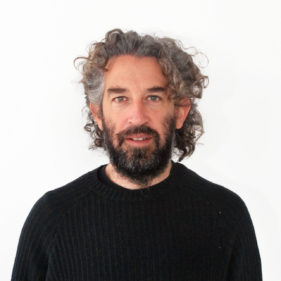
Domenico Sgambati
Chair of Natural Sciences - Area: Marine Biology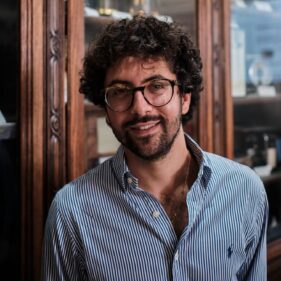
Paolo Iaccarino
Physics and Engineering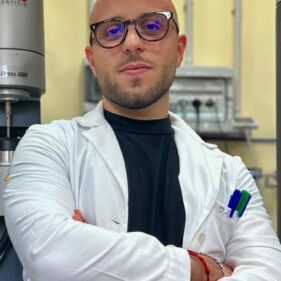
Gennaro Longobardo
Physics and Engineering
Vincenzo Donnarumma
Marine Biology
COURSE HIGHLIGHT
INTRODUCTION TO MARINE BIOLOGY WITH LAB
MSC 101/113
Professor Domenico Sgambati/Vincenzo Donnarumma
45 contact hours, 3 credits
MSC 101 – 45 hrs classroom + 45 hrs lab, 4 credits (Spring and Fall)
MSC 113 – 45 hrs classroom, 3 credits (Summer Terms)
This course focuses on the biology of organisms residing in the sea, from the diversity of planktonic communities to marine megafauna, taking into consideration the ecological principles that govern marine life.The course aims to provide a solid educational background in basic and applied marine biology. Emphasis will be placed on marine environment issues and the adaptive and evolutionary mechanisms of organisms that allow them to occupy marine habitats. In particular, the Mediterranean Sea will play a central role in the course subjects, profiting from the availability of unique ecosystems and a nearby renowned marine research institute to conduct thematic field trips and practical tutorials.
REQUIREMENTS: bring a mask and a snorkle for Marine Bio field trips
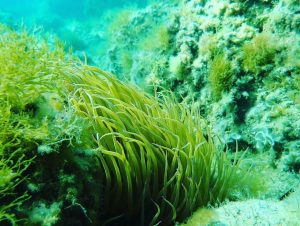
INTERNSHIP POSITIONS AVAILABLE:
- Marine Protected Area of Punta Campanella, Massa Lubrense
- Anton Dohrn Zoological Station, Naples
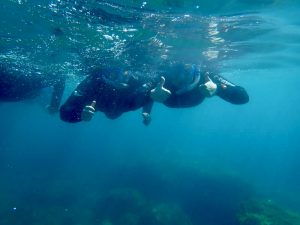
“It’s a very humbling experience working for the Earth.
When I’m in the Ocean and I’m cleaning it, you can actually see the true human impact that we’ve caused on such a beautiful environment as the Ocean.
We’re part of nature, not above nature. Finding ways to get more aligned with that mindset and reverse the damage we’ve done to the environment is definitely something I want to dedicate my life’s work towards.”
– Carly Owens, University of South Caroline – Intern at the Marine Protected Area of Punta Campanella
Watch her interview here
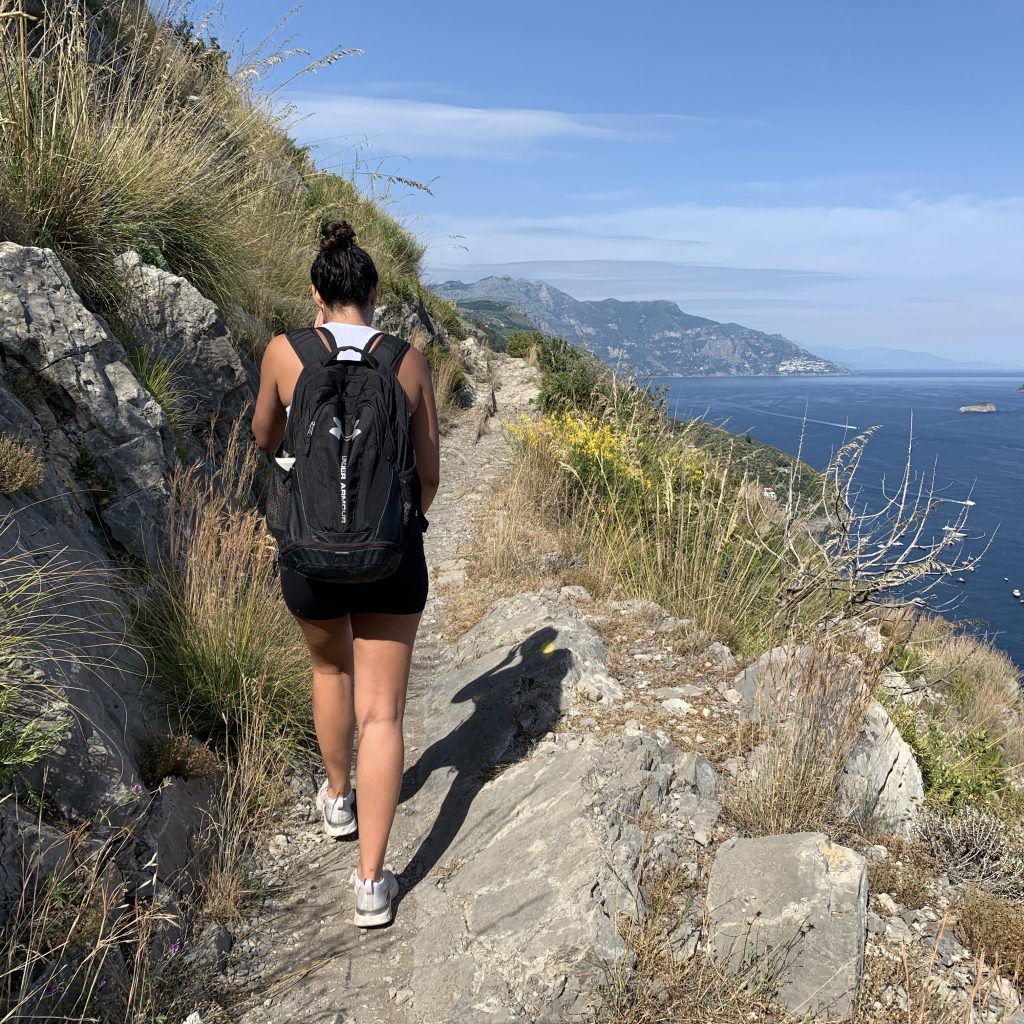
Discover Sant'Anna
Mission and GoalsAt Sant’Anna we strive to provide students from across the world a unique, hands-on learning experience where they can cultivate real world skills and knowledge.
Because the school is located in Sorrento, one of the most harmonious cities southern Italy has to offer, our students are truly able to gain a global awareness and appreciate diversity while studying abroad. Our goal is to help guide participating students into becoming responsible, open-minded members of society.
Our hope is that each student can leave Sant’Anna with an appreciation of the Italian culture as well as the knowledge acquired through their academic courses.
We are so passionate about the importance of international education and training in a student’s academic career, and we are dedicated to doing whatever it takes to providing students with a life changing experience.